
Understanding and adhering to lab safety protocols is crucial for a secure learning environment. Resources like downloadable PDF guides‚
and comprehensive codes of conduct‚
ensure students are prepared and accountable.
Importance of Lab Safety
Prioritizing lab safety isn’t merely about following rules; it’s fundamentally about protecting the well-being of everyone involved – students‚ instructors‚ and staff. A robust safety program‚ supported by administrative personnel and clearly defined responsibilities‚ minimizes risks associated with scientific experimentation.
Comprehensive safety guidelines‚ often available as downloadable PDF documents‚ ensure all individuals understand potential hazards and appropriate preventative measures. These resources detail everything from proper equipment usage to emergency procedures‚ fostering a culture of caution and preparedness.
Adherence to established protocols‚ like wearing appropriate personal protective equipment (PPE) and carefully reading experiment instructions‚ significantly reduces the likelihood of accidents and injuries. Accountability‚ through training and acknowledgement forms‚ reinforces the importance of safe practices. Ultimately‚ a safe lab environment promotes effective learning and responsible scientific exploration.
Scope of this Guide (PDF Focus)
This guide provides a foundational overview of essential lab safety practices‚ with a particular emphasis on resources available in PDF format. These downloadable documents‚ such as student laboratory codes of conduct and safety acknowledgement forms‚ offer detailed instructions and protocols for a safe learning environment.
The scope encompasses crucial areas like personal protective equipment (PPE) – including eye and hand protection‚ appropriate clothing‚ and footwear – as well as general lab conduct‚ chemical handling‚ and equipment safety. It also outlines emergency procedures‚ ensuring students know how to respond to accidents or incidents.
Furthermore‚ this guide references the importance of understanding and following specific safety instructions provided by instructors for each experiment. The PDF resources serve as a supplement to‚ and reinforcement of‚ these individualized guidelines‚ promoting a comprehensive approach to lab safety.
Personal Protective Equipment (PPE)
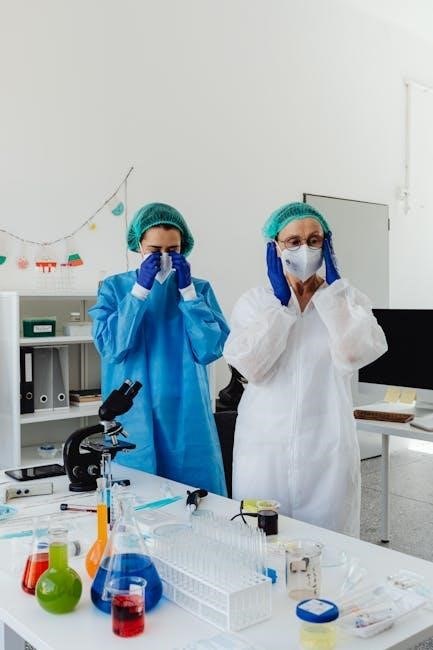
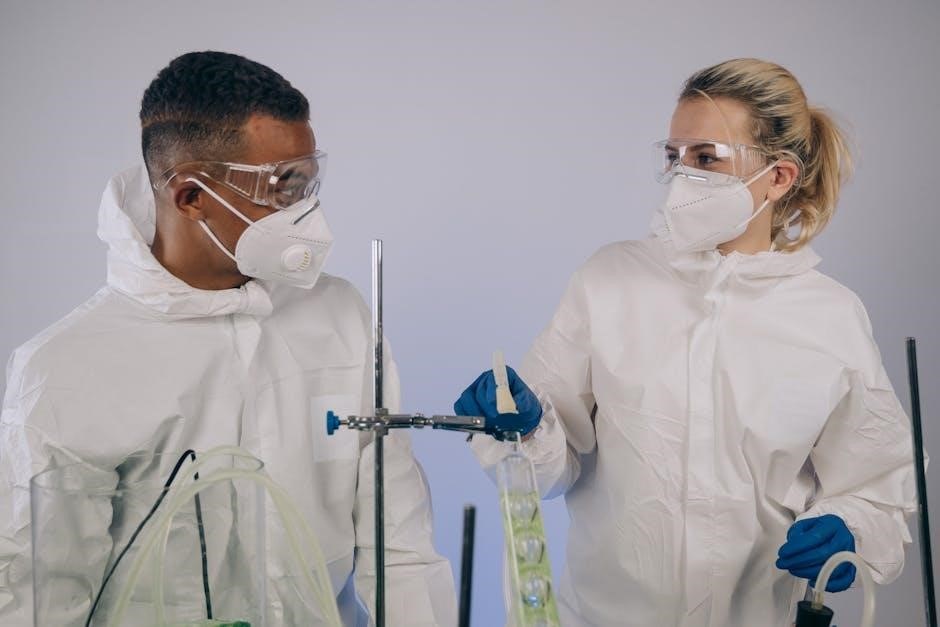
Essential PPE‚ like safety goggles and gloves‚ is mandatory during all lab experiments. Proper attire and closed-toe shoes are also crucial for student safety.
Eye Protection: Safety Goggles
Safety goggles are paramount in any laboratory setting‚ serving as the first line of defense against potential eye hazards. All students must wear appropriate‚ well-fitting safety goggles during any experiment where there’s a risk of chemical splashes‚ projectiles‚ or impacts. This isn’t merely a suggestion; it’s a non-negotiable requirement for lab access and participation.
The importance of consistent goggle use cannot be overstated. Even seemingly minor experiments can unexpectedly generate hazards. Goggles should be inspected before each use for cracks or damage‚ and replaced if compromised. Prescription glasses do not provide adequate protection and must be worn in conjunction with safety goggles. Resources‚ often found within lab safety PDF guides‚ detail proper goggle fitting and maintenance. Ignoring this rule can lead to severe‚ potentially permanent‚ eye injuries.
Hand Protection: Gloves
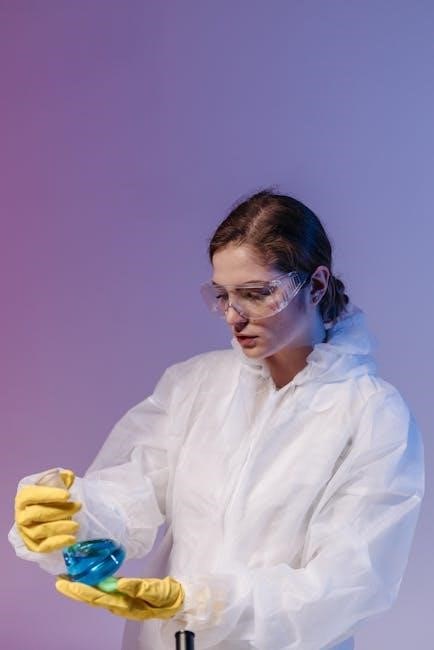
Gloves are essential for protecting hands from chemical exposure‚ biological hazards‚ and sharp objects within the laboratory. The selection of appropriate glove material is crucial‚ as different chemicals require different levels of protection; a lab safety PDF will often detail compatibility charts. All students should consult with their instructor to determine the correct glove type for each experiment.
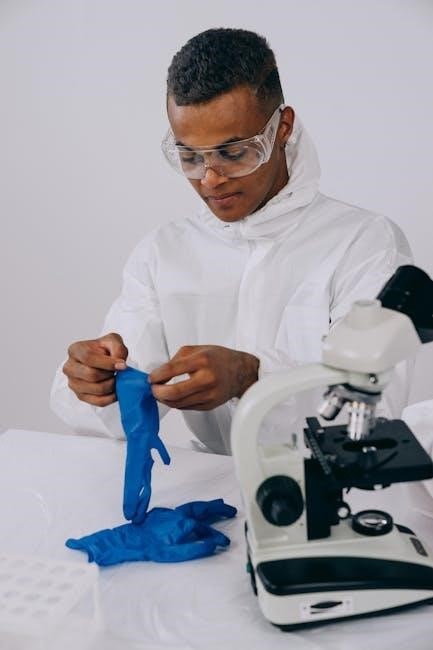
Gloves should be inspected for tears or punctures before use and changed immediately if compromised. It’s vital to remove gloves before touching common surfaces like doorknobs or keyboards to prevent contamination. Proper glove removal techniques‚ detailed in safety manuals‚ minimize skin exposure. Never leave gloves on while handling equipment or performing tasks outside the immediate experimental area. Consistent and correct glove usage significantly reduces the risk of skin irritation‚ chemical burns‚ and infection.
Clothing: Appropriate Attire
Appropriate clothing is a fundamental aspect of lab safety‚ minimizing risks from splashes‚ spills‚ and potential fires. A comprehensive lab safety PDF guide will emphasize the necessity of wearing clothing that covers as much skin as possible. All students are generally required to wear long pants and shirts with sleeves – avoiding exposed skin is paramount.
Loose clothing‚ dangling jewelry‚ and scarves should be avoided as they can catch on equipment or dip into chemicals. Closed-toe shoes are non-negotiable‚ protecting feet from spills and dropped objects. Lab coats are often mandatory‚ providing an additional barrier against contamination and protecting personal clothing. These coats should be buttoned and removed before leaving the lab to prevent spreading potential hazards. Adhering to these guidelines ensures a safer and more productive laboratory experience for everyone.
Footwear: Closed-Toe Shoes
Closed-toe shoes are a non-negotiable requirement in any science laboratory‚ as detailed in most lab safety PDF documents and student codes of conduct. This rule is paramount for protecting feet from a variety of potential hazards‚ including chemical spills‚ broken glassware‚ and dropped heavy objects. Sandals‚ flip-flops‚ and shoes with exposed toes offer no protection and are strictly prohibited.
The laboratory environment presents unique risks‚ and footwear serves as a crucial first line of defense. Shoes should be made of a durable material that can withstand accidental splashes or impacts. It’s also important to ensure shoes provide adequate support and traction to prevent slips and falls. All students must comply with this rule; instructors will enforce it to maintain a safe learning environment. Prioritizing appropriate footwear significantly reduces the risk of foot injuries in the lab.
General Lab Conduct & Procedures
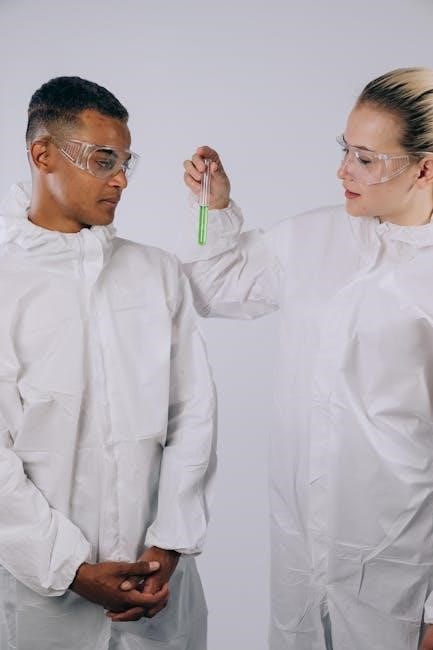
Following detailed instructions‚ listening to instructors‚ and proactively asking questions—as outlined in PDF safety guides—are vital for responsible lab conduct and student safety.
Reading and Understanding Instructions
Before commencing any laboratory investigation‚ students must thoroughly read and comprehend all provided directions. This foundational step‚ emphasized in numerous lab safety PDF resources‚ minimizes risks and ensures accurate experimental execution. A complete understanding isn’t simply skimming; it requires actively processing each step‚ identifying potential hazards‚ and visualizing the procedure.
Safety guidelines‚ often available as downloadable documents‚ consistently stress the importance of this initial review. Students should clarify any ambiguities with the instructor before proceeding. Ignoring instructions or assuming understanding can lead to accidents‚ compromised results‚ and potential harm.
Furthermore‚ recognizing the purpose of each step fosters a deeper learning experience. Lab manuals and instructor briefings often highlight critical safety precautions embedded within the experimental protocols. Paying close attention to these details is paramount for a safe and productive lab session.
Following Directions from Instructors
Instructors provide crucial guidance‚ and diligently following their directions is paramount for lab safety. These directives‚ often supplementing information found in lab safety PDF documents‚ are designed to mitigate risks specific to each experiment. Ignoring an instructor’s guidance can negate safety measures and potentially lead to hazardous situations.
Effective lab practice necessitates attentive listening and precise execution of instructions. Instructors may offer clarifications‚ demonstrate techniques‚ or emphasize critical safety points not explicitly detailed in written materials. A proactive approach involves seeking immediate clarification if any instruction is unclear or seems unsafe.
Moreover‚ instructors are responsible for ensuring students understand and adhere to established safety protocols. Their oversight is a vital component of a secure learning environment‚ and students must respect their authority and expertise. Compliance with instructor directions demonstrates a commitment to personal and collective safety.
Asking Questions When Unsure
Uncertainty in a lab setting demands immediate clarification; never proceed with an experiment if any aspect is unclear. Comprehensive PDF lab safety guides often cannot anticipate every individual question or unique situation. Proactive questioning demonstrates responsibility and a commitment to safe practices.
Hesitation to ask questions can stem from a fear of appearing uninformed‚ but this is counterproductive to a safe learning environment. Instructors and teaching assistants are resources meant to be utilized. They expect and encourage students to seek guidance when needed‚ ensuring proper understanding before proceeding.
Specifically‚ questions should address unclear instructions‚ potential hazards‚ or proper techniques. Don’t assume; verify. A quick question can prevent errors‚ accidents‚ and potential injuries. Prioritizing understanding over speed is a cornerstone of responsible lab conduct.
No Food or Drink in the Lab
Strictly prohibiting food and beverages within the laboratory is a fundamental safety rule‚ often emphasized in PDF lab safety manuals and student codes of conduct. This isn’t merely a suggestion; it’s a critical precaution against accidental ingestion of hazardous chemicals.
Chemicals can contaminate food or drinks‚ even if seemingly innocuous. Splashes‚ fumes‚ or residue on hands can easily transfer‚ leading to potentially severe health consequences. Furthermore‚ the presence of consumables can distract from focused attention on experimental procedures.
This rule extends to chewing gum and applying cosmetics. Dedicated break areas should be utilized for all eating and drinking. Maintaining a clean and focused lab environment minimizes risks and promotes responsible scientific practice. Prioritizing safety over convenience is paramount.
Chemical Safety
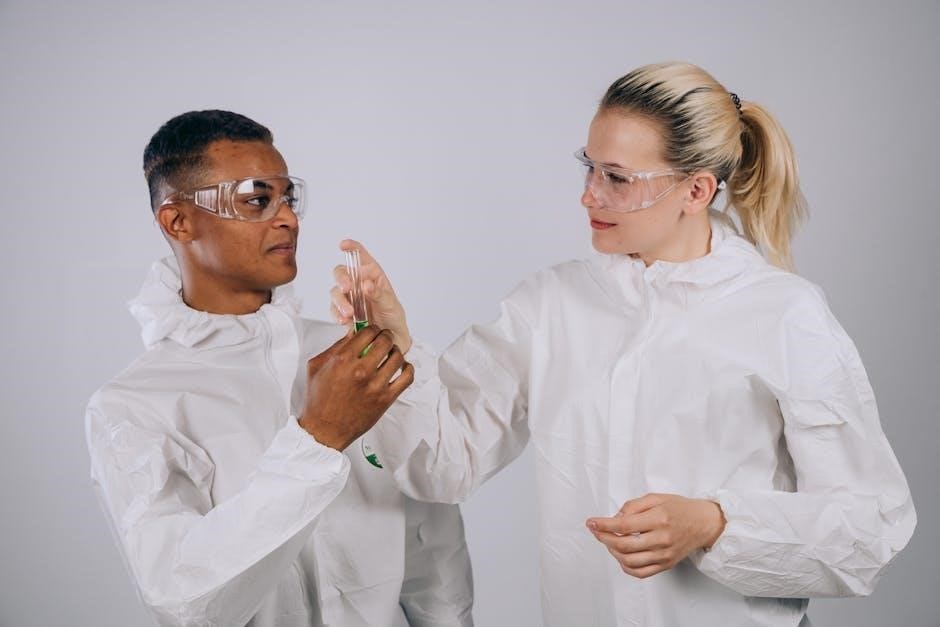
PDF guides detail careful handling‚ proper labeling‚ and spill procedures for all chemicals. Understanding waste disposal protocols is also essential for student safety.
Handling Chemicals with Care
Chemicals in the laboratory require utmost respect and cautious handling. PDF safety manuals emphasize reading all directions before beginning any experiment involving substances. Students must be alert and fully aware of potential hazards associated with each chemical used. Always assume a chemical is dangerous‚ even if it appears harmless.
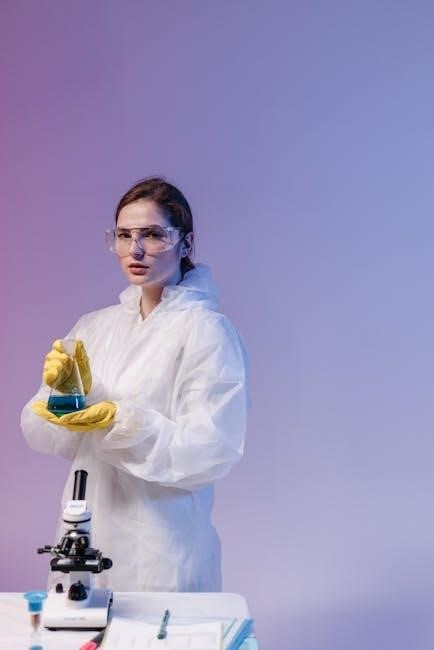
Never taste or smell chemicals directly; waft odors gently towards your nose if instructed. Avoid skin contact by wearing appropriate gloves‚ as detailed in safety guidelines. When mixing chemicals‚ always add acid to water‚ never water to acid‚ to prevent violent reactions. Be mindful of proper ventilation and avoid creating unnecessary fumes.
Carefully consider quantities – use only the amount needed for the experiment. Report any spills or accidents immediately to the instructor. A thorough understanding of chemical properties‚ as outlined in lab PDFs‚ is paramount for safe experimentation and responsible lab conduct.
Proper Labeling of Chemicals
Accurate and comprehensive chemical labeling is a cornerstone of lab safety‚ frequently detailed in student PDF guides. Every container‚ regardless of size‚ must be clearly labeled with the chemical name‚ concentration‚ date received‚ and any hazard warnings. Illegible or missing labels create significant risks and are strictly prohibited;
Labels should adhere firmly to the container and resist degradation from chemical exposure. Avoid using abbreviations or chemical formulas that may be ambiguous. When transferring chemicals to new containers‚ immediately apply a new‚ complete label. Secondary containers are just as important to label as original ones.
PDF resources often include examples of proper labeling formats. Regularly inspect labels for clarity and completeness. If a label is damaged or missing‚ treat the chemical as unknown and consult your instructor before handling. Proper labeling prevents accidental misuse‚ reactions‚ and potential injuries‚ fostering a safe lab environment.
Chemical Spill Procedures
Effective chemical spill procedures are vital‚ often outlined in detail within student lab safety PDF documents. Immediate action is crucial; notify your instructor and fellow students promptly. Assess the hazard – identify the spilled chemical and its potential risks before attempting cleanup.
Small‚ non-hazardous spills can often be handled with appropriate personal protective equipment (PPE) – gloves‚ goggles‚ and potentially a lab coat. Use absorbent materials like spill pillows or vermiculite to contain and absorb the spill. Larger or hazardous spills require evacuation and professional assistance.
PDF guides emphasize the importance of knowing the location of spill kits and understanding their contents. Never attempt to clean up a spill you are unfamiliar with. Proper disposal of contaminated materials is essential‚ following established waste disposal protocols. Thorough documentation of the incident is also required for safety records.
Waste Disposal Protocols
Proper waste disposal is a cornerstone of lab safety‚ comprehensively detailed in student lab safety PDF resources. Different chemicals and materials require specific disposal methods to prevent environmental contamination and ensure safety.
Never pour chemicals down the drain unless explicitly permitted by your instructor and outlined in the lab’s safety guidelines. Separate waste streams – acids‚ bases‚ solvents‚ and solid waste – into designated containers. Clearly label each container with its contents to avoid accidental mixing.
PDF guides often include detailed charts specifying disposal procedures for common lab chemicals. Broken glassware should be disposed of in designated sharps containers to prevent injuries. Always follow your instructor’s guidance and consult the safety data sheets (SDS) for specific disposal instructions. Responsible waste management is a critical component of a safe lab environment.
Equipment Safety
Student PDF guides emphasize correct instrument use‚ safe glassware handling‚ and electrical safety. Proper training and adherence to protocols are essential for preventing accidents.
Safe Use of Glassware
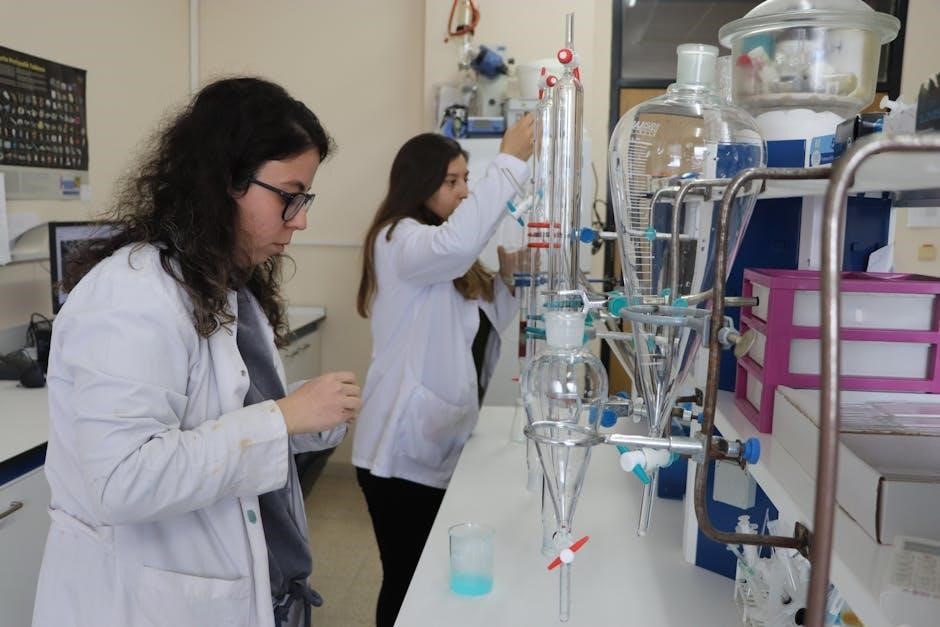
Glassware‚ a staple in many labs‚ requires careful handling to prevent breakage and potential injury. PDF lab safety manuals consistently highlight the importance of inspecting glassware for cracks or chips before each use; damaged items should be discarded properly.
Students must learn to gently insert glass tubing into rubber stoppers‚ lubricating the glass and twisting carefully to avoid breakage. When heating glassware‚ it’s vital to use appropriate heat-resistant gloves and ensure even heating to prevent thermal shock.
Never force glassware connections. Always use a designated container for broken glass disposal – never place it in regular trash. Understanding the limitations of different glass types and following established procedures‚ as detailed in safety guidelines‚ minimizes risks and promotes a safe lab environment for everyone. Proper technique is paramount.
Electrical Safety in the Lab
Electrical hazards are a significant concern in science labs‚ and PDF safety documents emphasize strict adherence to safety protocols. Students must always inspect electrical cords for fraying or damage before use‚ and never operate equipment with compromised wiring.
Avoid using electrical equipment near water sources to prevent shocks. Ensure hands are dry when handling electrical devices. Overloading circuits is strictly prohibited; follow specified voltage and amperage limits.
Report any malfunctioning equipment immediately to the instructor. Never attempt to repair electrical equipment yourself. Understanding proper grounding procedures and utilizing Ground Fault Circuit Interrupters (GFCIs) are crucial safety measures. Comprehensive lab safety guides detail these procedures‚ ensuring a secure environment and minimizing the risk of electrical accidents.
Using Instruments Correctly
Proper instrument usage is paramount for both accurate results and student safety‚ as detailed in comprehensive PDF lab safety manuals. Before utilizing any instrument‚ students must receive thorough instruction on its operation and limitations from the instructor.
Never attempt to operate equipment without understanding its function. Handle delicate instruments with care to prevent breakage and potential injury. Report any malfunctioning or damaged instruments immediately.
Always follow specific procedures outlined in the lab manual or by the instructor. Misusing instruments can lead to inaccurate data‚ equipment damage‚ and‚ most importantly‚ safety hazards. Acknowledgment forms often confirm understanding of these protocols‚ reinforcing responsible instrument handling and a safe lab environment.

Emergency Procedures
Knowing emergency protocols‚ including safety equipment locations and accident reporting‚ is vital. PDF guides detail these steps‚ ensuring swift and appropriate responses to incidents.
Knowing the Location of Safety Equipment
Prior to commencing any laboratory activity‚ students MUST familiarize themselves with the location of all safety equipment. This includes‚ but isn’t limited to‚ fire extinguishers‚ eyewash stations‚ safety showers‚ first aid kits‚ and spill control kits. Many institutions provide detailed maps within their lab safety PDF documents‚ clearly illustrating the placement of these critical resources.
Effective emergency response hinges on immediate access to these tools. Students should be able to quickly and confidently locate the nearest eyewash station in case of chemical splashes‚ or the fire extinguisher in the event of a small fire. Regular drills and reviews‚ often outlined in lab manuals and safety PDFs‚ reinforce this knowledge. Understanding how to use the equipment is equally important‚ and training should be provided by instructors.
Furthermore‚ students should be aware of the location of emergency exits and evacuation routes‚ as detailed in posted signage and safety guidelines. A proactive approach to safety equipment knowledge significantly minimizes potential harm during unforeseen events.
Reporting Accidents and Injuries
Prompt and accurate reporting of all accidents and injuries‚ regardless of severity‚ is a fundamental aspect of lab safety. Students MUST immediately notify their instructor of any incident‚ including minor cuts‚ burns‚ spills‚ or exposures. Delaying reporting can exacerbate injuries and hinder appropriate response measures. Comprehensive lab safety PDF guides typically detail the specific reporting procedures.
Detailed incident reports are crucial for identifying hazards and preventing future occurrences. These reports should include a clear description of the event‚ the location‚ the individuals involved‚ and any contributing factors. Many institutions utilize standardized incident report forms‚ often available as downloadable PDFs‚ to ensure consistency and completeness.
Remember‚ reporting is not about assigning blame; it’s about fostering a culture of safety and continuous improvement. Following established reporting protocols‚ as outlined in lab manuals and safety PDFs‚ protects both the individual and the entire lab community.
Fire Safety Procedures
Understanding fire safety procedures is paramount in any laboratory setting. Students must familiarize themselves with the location and proper use of all fire safety equipment‚ including fire extinguishers‚ fire blankets‚ and emergency exits. Detailed instructions are often included in comprehensive lab safety PDF guides and reviewed during initial training.
In the event of a fire‚ the immediate priority is personal safety. Students should calmly alert others‚ activate the fire alarm‚ and evacuate the lab following the designated escape route. Do not attempt to extinguish a fire unless you have been properly trained and it is a small‚ contained fire. Lab safety PDFs emphasize the importance of knowing evacuation plans;
Never hesitate to contact emergency services if a fire cannot be controlled. Remember‚ prevention is key; always handle flammable materials with extreme caution and adhere to all safety guidelines outlined in lab manuals and downloadable PDF resources.
Lab Safety Acknowledgement Forms (PDF Download)
To ensure all students understand and commit to safe laboratory practices‚ a signed acknowledgement form is typically required. These forms‚ often available as a downloadable PDF‚ outline key safety rules‚ potential hazards‚ and emergency procedures specific to the lab environment. Completing and submitting this form demonstrates a student’s responsibility and awareness.
The PDF document serves as a formal record of understanding‚ confirming that students have read and comprehended the lab safety guidelines. It typically includes sections covering personal protective equipment (PPE)‚ chemical handling‚ equipment usage‚ and emergency protocols. Schools and institutions‚ like those referenced by the ACS Center‚ utilize these forms to mitigate risk.
Downloadable acknowledgement forms are a vital component of a comprehensive lab safety program‚ promoting a culture of safety and accountability. Regularly reviewing and updating these PDF resources ensures they remain current and effective in protecting students.